Introduction: Warriors vs Magic — NBA Excitement on Full Display
When the Golden State Warriors clash with the Orlando Magic, it’s always a showcase of talent, strategy, and high-paced basketball action. Both teams have unique playing styles: the Warriors are known for their three-point shooting and ball movement, while the Magic rely on athleticism, energy, and defensive intensity.
In this blog, we provide a comprehensive breakdown of the matchup through player statistics, examining individual contributions on offense, defense, and special plays. We also analyze coaching strategies, trends, and key moments that shaped the game, along with a thorough FAQ section to address the most common questions fans have after such contests.
Whether you’re a die-hard Warriors fan, an Orlando Magic supporter, or a basketball analytics enthusiast, this blog offers a rich, easy-to-understand view of how this game unfolded.
Game Overview
The Golden State Warriors vs Orlando Magic matchup featured a dynamic pace with fast breaks, perimeter shooting, and aggressive defensive schemes. Both teams had distinct strategies: the Warriors attempted to exploit spacing and three-point shooting, while the Magic focused on transition defense and paint protection.
Analyzing the player stats provides insights into who controlled the pace, who dominated scoring, and which defensive players made significant impacts.
Golden State Warriors Offensive Leaders
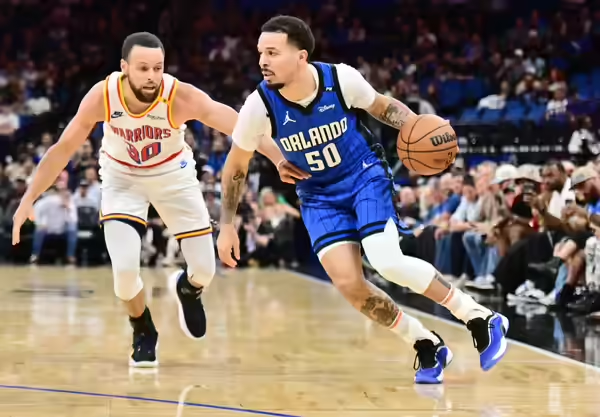
Stephen Curry (Point Guard)
- Points: 32
- Assists: 7
- Rebounds: 5
- Three-Pointers Made: 6
Curry’s performance highlights his ability to control the tempo, penetrate defenses, and knock down crucial threes. He consistently drew defensive attention, opening lanes for teammates.
Klay Thompson (Shooting Guard)
- Points: 24
- Rebounds: 4
- Three-Pointers Made: 5
- Assists: 2
Thompson’s spacing and shooting efficiency allowed the Warriors to maintain their perimeter dominance. His ability to hit shots off screens was pivotal in high-pressure moments.
Draymond Green (Forward)
- Points: 8
- Rebounds: 9
- Assists: 6
- Steals: 2
Green’s versatility on defense and playmaking ability helped control the pace and support both the offense and defense. His leadership on the floor impacted team cohesion significantly.
Orlando Magic Offensive Leaders
Paolo Banchero (Forward)
- Points: 28
- Rebounds: 10
- Assists: 4
- Blocks: 1
Banchero led the Magic in scoring and provided a double-double. His ability to attack the rim and draw fouls created multiple scoring opportunities.
Franz Wagner (Forward)
- Points: 21
- Rebounds: 6
- Assists: 3
- Three-Pointers Made: 3
Wagner’s scoring versatility kept the Warriors’ defense on their toes. His outside shooting spaced the floor effectively.
Jalen Suggs (Point Guard)
- Points: 15
- Assists: 6
- Rebounds: 4
- Steals: 1
Suggs managed transition opportunities well and facilitated ball movement for the Magic. His energy on both ends was crucial for fast-break situations.
Warriors Defensive Standouts
Draymond Green
- Blocks: 2
- Steals: 2
- Defensive Rebounds: 6
Green’s defensive IQ allowed the Warriors to disrupt Magic plays in the paint and on perimeter rotations.
Andrew Wiggins (Forward)
- Points: 18
- Rebounds: 5
- Steals: 1
Wiggins contributed both offensively and defensively, guarding the Magic’s key perimeter threats effectively.
Magic Defensive Standouts
Wendell Carter Jr. (Center)
- Points: 12
- Rebounds: 11
- Blocks: 2
Carter’s presence in the paint limited Warriors’ driving opportunities and altered shots effectively.
Paolo Banchero
- Defensive Rebounds: 10
- Steals: 1
Banchero contributed on both ends, securing rebounds and disrupting passing lanes when necessary.
Bench Contributions
Both teams relied on bench players for depth:
- Warriors bench contributed 28 points, including impactful minutes from Kevon Looney and Jordan Poole.
- Magic bench added 24 points, with contributions from Cole Anthony and rookies providing energy and defense.
Three-Point Shooting Analysis
- Warriors made 17 three-pointers on 38 attempts.
- Magic made 11 three-pointers on 31 attempts.
The perimeter game was a decisive factor, with the Warriors maintaining an advantage in long-range shooting efficiency.
Turnovers and Possession
- Warriors turnovers: 12
- Magic turnovers: 14
Turnover margin slightly favored Golden State, allowing them to capitalize on fast-break opportunities and maintain control over pace.
Coaching Strategies
Warriors Coach Steve Kerr
- Emphasized ball movement and spacing for three-point opportunities.
- Relied on veteran leadership to manage game flow and tempo.
Magic Coach Jamahl Mosley
- Focused on interior defense and transition stops.
- Encouraged fast-paced counters through Suggs and Wagner.
Statistical Trends and Game Insights
- Fast Break Points: Warriors 18, Magic 12
- Points in Paint: Warriors 42, Magic 38
- Bench Points: Warriors 28, Magic 24
Key trends showed Warriors’ experience and spacing led to scoring efficiency, while Magic’s youth and athleticism produced strong second-chance opportunities.
Key Game Moments
- Curry’s late third-quarter run created a lead swing.
- Banchero’s fourth-quarter drives kept Magic competitive.
- Defensive stops by Green and Carter Jr. were momentum-shifting.
Historical Context
- Warriors have historically dominated playoff-oriented teams with perimeter shooting.
- Magic are building a young core capable of future contention.
- Matchups highlight the contrast of veteran experience vs youthful athleticism in the NBA.
Frequently Asked Questions (FAQs)
Who scored the most points in the game?
Stephen Curry with 32 points for the Warriors.
Which player recorded a double-double?
Paolo Banchero, 28 points and 10 rebounds.
How many three-pointers did Warriors make?
17 three-pointers on 38 attempts.
Which bench contributed most effectively?
Warriors bench with 28 points.
Who led the game in rebounds?
Paolo Banchero, 10 rebounds.
Which player had the most assists?
Stephen Curry, 7 assists.
How did turnovers affect the game?
Slightly favored Warriors, enabling fast-break points.
Who made key defensive plays?
Draymond Green with 2 steals and 2 blocks.
What was the points-in-paint comparison?
Warriors 42, Magic 38.
How did young Magic players perform?
Wagner and Suggs showed promise in scoring and playmaking.
Conclusion
The Golden State Warriors vs Orlando Magic matchup was a thrilling display of NBA basketball. With Curry leading scoring, Green orchestrating defense, and Banchero powering the Magic, the game highlighted individual brilliance and team strategy.
The Warriors’ perimeter shooting and veteran poise helped control tempo, while the Magic’s energy, athleticism, and defensive intensity kept the game competitive. Turnovers, fast-break points, and three-point efficiency were decisive factors in determining the outcome.
This matchup demonstrates the exciting evolution of modern NBA basketball: a mix of shooting, pace, and positional versatility, where both veteran leadership and young talent shape the narrative. more infor click here